A safer, more engaging way to experience driving
VIVE is an EU-funded project that reimagines the vehicle interior as a seamless immersive display environment, introducing human-centric XR Head-Up Displays for a more naturalistic, intuitive and safer driving experience. It is funded under the Horizon Europe call HORIZON-CL4-2025-03-HUMAN-14 – Core technologies for virtual worlds, within the strategic scope of the EU's Virtual Worlds and Photonics Partnerships.
WHY VIVE
Distraction and cognitive overload are still driving accidents
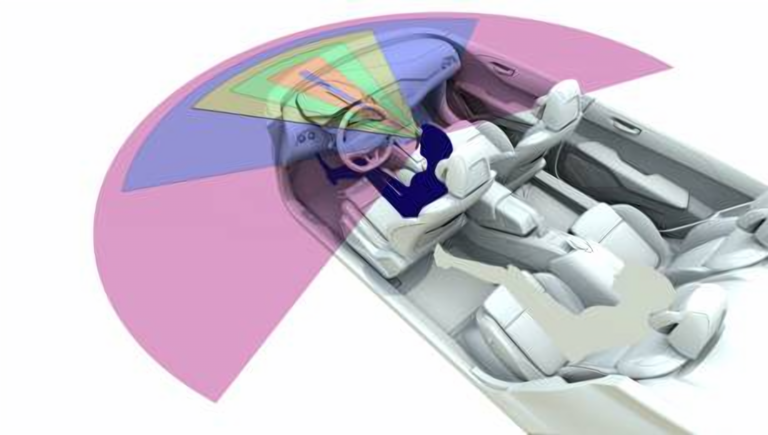
Road accidents remain closely tied to driver distraction, fatigue and information overload. As vehicles take on more autonomy, drivers need clearer, more intuitive ways to stay aware, without adding to the noise.
VIVE raises driver awareness and reduces distraction by projecting rich, explained information directly into the driver's field of view, making autonomous and semi-autonomous driving easier to understand and trust.
Reduced distraction
Lower cognitive load
Trusted autonomy
Less time looking away from the road.
Information presented when and where it's needed.
Clear explanations build confidence in self-driving systems.
OUR APPROACH
Four disciplines, one interface
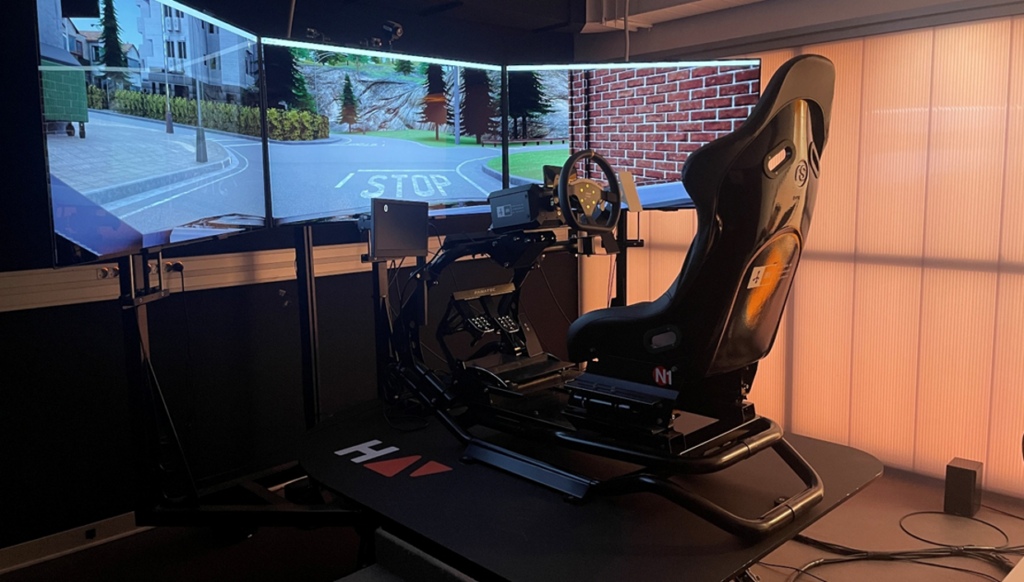
VIVE integrates optics, photonics, sensor fusion and design into a single system built for improved human-vehicle interaction. Guided by Human Factors and User-Centred Design principles, VIVE keeps ergonomics, inclusivity and real user perception embedded in every step. The system is validated across three complementary pilots: static in-cabin integration, immersive driving simulation and controlled real driving.
01
Optics
Precision projection optics that stay compact within the cabin.
02
Photonics
Laser sourcing and combiner films engineered for clarity in daylight.
03
Sensor Fusion
Real-time understanding of the road and driver state.
04
Design
Information shaped around what a driver can actually absorb.
CONSORTIUM
A European partnership
VIVE brings together 10 partners across 6 countries, coordinated by AIMEN (Asociación de Investigación Metalúrgica del Noroeste), a Galician technology centre with almost six decades of R&D&I expertise in advanced manufacturing, materials and digitalisation. The consortium spans Spain (AIMEN, Ficosa Automotive, Instituto de Biomecánica de Valencia), France (Institut Mines-Télécom), Germany (Hochschule Pforzheim, Harju Pia Elina), Belgium (PlanOpSim, XR4Europe), the United Kingdom (Design Led Products) and Finland (Aitoo Design) and combines automotive manufacturers, photonics and optics specialists, human-factors researchers and design studios.